Showing posts with label Quakers. Show all posts

Sunday, August 23, 2009

Reflections on Getting Older

From Britain Yearly Meeting Faith and Practice. This spoke to me today.
If we are getting older it will be harder to acknowledge that we have not been called to spectacular service, that we are unlikely now to make a stir in the world, that our former dreams of doing some great healing work had a great deal of personal ambition in them.

A great many men and women have had to learn this unpalatable lesson -- and then have discovered that magnificent opportunities lay all around them. We need not go to the ends of the earth to find them, we need not be young, clever, fit, beautiful, talented, trained, eloquent, or very wise. We shall find them among our neighbors as well as among strangers, in our own families as well as in unfamiliar circles -- magnificent opportunities to be kind and patient and understanding.

This is a vocation just as truly as some more obviously seen as such -- the vocation of ordinary men and women called to continual unspectacular acts of loving kindness in the ordinary setting of every day. They need no special medical boards before they embark on their service, need no inoculation against anything but indifference and lethargy and perhaps a self-indulgent shyness. How simple it sounds; how difficult it often is; how possible it might become by the grace of god.
-- Clifford Haigh, 1962


Friday, December 19, 2008

Book Review: Quaking

Reading Quaking now seems like ancient history -- I think I finished it last Sunday -- but I intended to write a review of it, so I will. I have a little extra time today since school was canceled because of snow, our second snow day in as many weeks. This one is particularly sweet as it butts up against winter break.

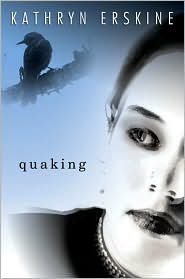
On to the book review! Quaking by Katherine Erskine is a young adult novel, about a 14 year old girl named Matt. Matt has been living under the care of various distant relatives since her abusive father murdered her mother one day while Matt was at grade school. Matt has been shunted from relative to relative, largely, it is implied, because of her poor behavior.

The story opens with her in the car with a woman she calls "Loopy", an evangelical Christian who can no longer care for Matt because she's going on a mission. They are on the way to live with Sam and Jessica, distant cousins in a small town in Pennsylvania, who happen to be Quakers. Loopy tells Matt that they are her "last chance", I guess to stay out of the criminal justice system.

Matt is angry and rebellious. She dresses in black, wears lots of eyeliner, and paints a black widow spider on her face every day. She is determined to alienate everyone around her. She comes to live with Sam and Jessica, who are determined to love her unconditionally as they love their other foster child, a disabled toddler whom Matt calls "the blob." In keeping with the Quaker peace testimony, Sam is actively involved in protesting an ongoing war, taking an unpopular stance in their community.

I wanted to like Quaking. The author has created a likable protagonist, and you'd have to have a heart of stone not to be rooting for Matt. She also got the facts right, as well as capturing many of the nuances of one particular group of U.S. Quakers. I particularly appreciated that she portrayed modern Quakers; so often the only glimpse readers get of Friends is in a historical context -- all bonnets and thees and thous.

I wanted to like Quaking but (and as Pee Wee says, there's always a big but) I didn't, for a few reasons. In an interview with the author about the book, she said that she intentionally didn't identify the war because she wanted to create a timeless sense. However, she did clearly set her story in a post-9/11 world and I found the generic quality of the war to be irritating, to say the least. I believe, to really take a stand against the Iraq war -- as she genuinely seemed to want to do -- it is important to be specific. I mean, even the Bush White House sends out Christmas cards that say "Peace On Earth."

I felt that the Friends she created in Sam and Jessica were reduced to being cartoon Quakers. Sure, they weren't wearing bonnets, but she managed to work in every other Quaker idiom, and I found it tiresome after a while. To a non-Quaker -- especially a teen -- it may serve to underscore the peculiarity of Friends in a nonflattering way.

Then there was Matt. Her past sounded horrific -- abuse, the violent death of her mother, abandonment, lack of stability ... yet, seemingly without any counseling of any sort, just the love of two earnest and well-meaning Quakers in a relatively short period of time, Matt becomes a whole person.

Finally, she managed to incriminate the war, while never once implicating those in power who started this war. The book gave the impression that this (nameless) war just happened, kind of like natural disasters just happen. Acts of God, or whatever. Once again, I feel very strongly that if the author wanted to use it as more than a literary device, she should have been more specific. The war on Iraq was started by individuals and based on lies, I'm sure Erskine's Sam would agree.

Of course, I am an adult (and an opinionated one at that) reading a book written for adolescents. Would I recommend this book to a teen? Yes, I would. It is a compelling story and may open their eyes about a few things. However, I didn't think it was great.

Sunday, September 28, 2008

I Can See Clearly Now

A basic tenet of Quakerism is that, not only is God still speaking (referred to as "the continuing revelation") but that Divine wisdom is available to anyone at any time. We worship by sitting in silence, waiting for the "still small voice" of the Divine to speak to/through us, and the potential exists for any worshiper to receive a message.

Quaker worship is, by and large, corporate worship. No, that doesn't mean that this week's worship is brought to you by EXXON. It refers to the body of the Meeting, the group. We worship together in silence broken only by individuals who are moved (or led) to stand to deliver a message. There have been many, many times when I have been turning a thought over in my mind and someone across the room has stood up and spoken about the very thing that was on my mind! In Friendly parlance that is sometimes called "speaking to one's condition" as in "Friend, you spoke to my condition." It never fails to give me the shivers when it happens. That is the beauty of corporate silent worship.

One of my favorite aspects of Quakerism is the notion of seeking clearness (or clarity.) In Quaker Meeting we have a process for those who are seeking clarity around a specific question, called a "clearness committee." Within Meetings clearness committees are most frequently convened for individuals seeking official membership in that particular Meeting and for couples seeking to marry under the care of the Meeting. Clearness committees can also be requested when an individual is wrestling with a thorny issue or when people are engaged in a seemingly unresolvable conflict. (I requested a clearness committee a few years ago when I had what could be described as a crisis of faith around my chosen profession, teaching. It was very sustaining and helpful.)

In short, a clearness committee is a small group of people who meet with an individual -- or couple -- around a specific issue. A committee's charge is first and foremost to listen to the focus individual, and then to ask questions which will guide that individual in discerning what their right action should be (or in faith-based language, what the Divine wants of them.) It is not the charge of the committee to act as gatekeepers or the Spanish Inquisition. (Go ahead, Python fans, say it. I'll wait.) It is to be hoped that the person who requested the committee is seeking clearness, not clearance.

Anyway, I love being part of clearness committees. Participation is always enlightening and often joyful. I am currently a member of my Meeting's Care Committee (Quakers are inordinately fond of committees) which is the body responsible for convening clearness committees for membership and marriage. In fact, this week I participated in a meeting for membership. I am also the co-convener of a clearness committee for marriage for a dear friend, which has yet to be scheduled (good thing the wedding is still months away.) It's my first time convening a clearness committee. Yikes!

Parker Palmer, in his Courage To Teach program, has adopted the framework and language of the clearness committee and introduced it to the world outside of Quaker Meeting. I guess that's a good thing, although I question whether the process can be disconnected from its roots. (Other Friends ... what do you think?)

And for the rest of you, now you know perhaps more than you cared to know about one tiny part of Quakerism.

Wednesday, July 16, 2008

The Grumpy Librarian


While weeding the fiction section of the library today I came upon a book written by someone I knew: Keys For Signe, written by Marion Fuller Archer and published in 1965! Marion and her husband Leonard were long-time members of the Madison Monthly Meeting. They were both librarians. Leonard exuded Old World grace, while Marion always had a Puckish twinkle about her. As the convener of our meeting's library committee, she would periodically stand up after meeting for worship, and with a completely deadpan demeanor, identify herself as "the grumpy librarian" before giving a forthright scolding about overdue books checked out from the meetinghouse library. When I first began attending Quaker meeting I was a little intimidated by her (as well I should be -- I am a terrible offender when it comes to overdue library books.) Over time, I became aware of what a lovely person she was.

She was the consummate librarian. They don't make them like her anymore (one reason that I am so frustrated with the master's program that I'm in.) I had no idea that she was also an author. I showed the book to the librarian who is mentoring me, and then I got another surprise. He said, "Oh, she's the founder of the Golden Archer Award." Unlike other awards given for children's literature -- like the Newbery and Caldecott Awards -- which are selected by committees of adults, the Golden Archer Award, and its picture book counterpart, the Little Archer, is given each year to a book that is selected by schoolchildren all across Wisconsin. That's a pretty special kind of recognition.

Marion Archer died last year. Her husband preceded her in death by several years. I am sad that I didn't know them better. I feel as if I found a little buried treasure today.

Saturday, July 12, 2008

Human Smoke: The Beginnings of World War II, the End of Civilization

Human Smoke explores the roots of war through the lens of World War II. Using newspaper articles, diaries, letters, memoirs, and official documents, the author, Nicholson Baker, assembled hundreds of discrete vignettes into a compelling narrative that should dispel numerous myths about the early days of the "Good War." The evil of the Third Reich hardly needs more exposure, but this book offers further insight into the warped and perverse ideals that drove Hitler and his followers.

What surprised me in this book was the depth of the racism that motivated Winston Churchill. If you took speeches that Churchill made, and substituted the word "Jew" for "Hun" you might be hard-pressed to know that you weren't listening to Hitler. It was the British that began the indiscriminate bombing of the civilian population of Germany, for which "the Blitz" was retaliation.

And lest you think the European arm of the war was about freeing the Jews, guess again. Churchill's 1941 blockade of food, medicine, and clothing to the German-occupied countries caused the death of thousands and thousands of civilians, many of them Jewish refugees that had been expelled from their homes. Not to mention the Jewish refugees that were rounded up and imprisoned in concentration camps in England, because they were Germans too and might hold German sympathies.

Then there were the refugees that actually made it onto ships and escaped the carnage in Europe. The United States and countries of the British Commonwealth [i.e. Empire] enforced strict quotas as to how many refugees would be accepted every year. There were many instances of ships carrying refugees turned away from port after port. In some documented cases the ships were actually shelled at sea, killing most of their passengers.

(I remember my mother once telling me that the blame for the war between Israel and Palestine lay with Britain and the United States, for turning their backs on Jewish refugees. I had no idea of the magnitude.)

While Churchill is lusting for the blood of Huns, FDR is actively fomenting the Sino-Japanese War while tightening the noose around Japan, hoping to provoke them into an attack on the U.S. The attack on Pearl Harbor, when it came, was not a surprise. It was fully expected and the date that it occurred was anticipated, so essentially the 2000+ people that died in the attack were used as bait.

Baker also shows the profiteers: the arms manufacturers, the scientists and academics who saw war as a cash cow for their research, the opportunists (like Wisconsin native son, Frank Lloyd Wright, who thought the total destruction of those old European cities was a good thing, so that new cities could be built following a new plan -- his. What a weenie.)

The other thread of the story that Baker tells -- one that has not been told enough -- is that of the pacifists who actively resisted the war by working for diplomatic solutions, by defying Churchill's blockade to feed the starving population of Europe, by going to jail rather than fighting. Gandhi figures prominently, as do Clarence Pickett, Herbert Hoover, and Rufus Jones of the Religious Society of Friends. He mentions the Socialist Party and its leader Norman Thomas, the Women's International League for Peace and Freedom, the Fellowship of Reconciliation, and the War Resisters' League. Congresswoman Jeanette Rankin is lauded for casting the lone dissenting vote against joining the war. Many other individuals are mentioned as well, people in many countries.

Baker does not draw any parallels between his narrative and current events as we are experiencing them, but the parallels are clear. Just as the seeds of World War II were sown in World War I, we see the seeds of the Viet Nam War being sown during World War II. Violence begets violence, that is the message of this book.

Invariably when one is a pacifist, someone will say, "Yeah, but what about World War II?" Baker did impeccable research and presents reams of evidence that World War II was not inevitable, that like all wars it was motivated by a lust for power and profit, predicated on propaganda and lies.

Baker dedicates Human Smoke to "the memory of Clarence Pickett and other American and British Pacifists. They've never really gotten their due. They tried to save Jewish refugees, feed Europe, reconcile the United States and Japan, and stop the war from happening. They failed, but they were right."

I highly recommend Human Smoke. It is not a pretty book, many parts are painful to read, while others will infuriate. It is, however, in a format that is quite easy to read and I think you will find it absolutely compelling.

Monday, April 14, 2008

Minding the Gap

Note: This post contains references to God and expressions of faith. I consider myself to be agnostic. While I am certain of the existence of something that resides in and beyond myself, that connects me with all of this world, because of my upbringing I am not comfortable referring to it as "God." Sometimes I refer to "spirit" or to the term used by a dear old Friend, Francis Hole: "Divine Companion." Sometimes I just sort of mumble something incoherently or borrow a god from Terry Pratchett.

I was not brought up a Friend, and in fact worship and prayer were never a part of my life experience until I began attending Quaker Meeting 16 years ago. I love Meeting for Worship, but I confess that sometimes I have a hard time centering down and calming my monkey mind. Therefore I will often bring a book of devotional readings with me to Meeting, which I know irritates some Friends no end, but there you have it. At least I don't knit! Or snore ...

Last Sunday I had one of my current favorite books with me, Catherine Whitmire's Practicing Peace: A Devotional Walk Through the Quaker Tradition. I find myself turning to this book quite often for guidance in navigating these troubled and disheartening times, when a world without war seems very far away. Whitmire talks about how, as Friends we are challenged to stand in the gap between the way things are and the way they could be. The writer/educator Parker Palmer puts it this way:
There is no easy solution. There never has been and there never will be. But we must learn to stand in this gap, faithfully holding the tension and negotiating between what is and what is possible. (p. 30)
Whitmire adds, "Through prayer and discernment we, too, can know in which gaps God would have us stand. Our efforts may feel unimportant, but nothing is too small to make a difference ... It is important that we climb God's holy hill and stand in the social, political, and spiritual gaps of our time, not only because God calls us, but because there is no one else to go." [my italics]

I find myself yearning for a leader, another Gandhi or King, who will make big waves and bring about another social and political revolution. I am discouraged when no one appears. The fact is, we have to be the ones to carry that torch. Each of us has the capacity to plant those seeds, to bring about change. We have to, because there is no one else to do it.

Thomas R. Kelly said,
No giant figure of historic size will stalk across the stage of history today, as a new Messiah. But in simple, humble, imperfect people like you and me wells up the spring of hope. We have this treasure of the seed in earthen vessels -- very earthen vessels. You and I know how imperfect we are. Yet those little demonstrations of love and goodwill ... deeds done in the midst of suffering ... stir hope that humanity as a whole will be aroused to yield to the press and surge of the Eternal Love within them ... (p. 31)
How am I minding the gap, and working for a peaceful and just world?

(The photo above was taken in London last month by my friend Vicki, who minds the gap by working to get military recruiters out of our local schools. Used by permission.)

Wednesday, April 09, 2008

Book Review: The Peaceable Kingdom


The Peaceable Kingdom: An American Saga by Jan de Hartog is a sweeping epic novel about Quakers in the United States. One of two volumes (the second is The Lamb's War) it covers a period of a little over 100 years, from 1652 to 1755. Presumably it is well researched, considering that it is a stalwart of most Quaker libraries. The novel begins in Lancashire, England with George Fox's arrival at Swarthmoor Manor, the home of Margaret Fell. (For those unacquainted with Friends: George Fox was the founder of the Religious Society of Friends, Margaret Fell is sometimes called "the mother of Quakerism" and Fell's home, Swarthmoor, gave it's name to Swarthmore College, which was founded by Friends. Whew. Got that? There will be a quiz at the end of the post.) Fox had been spreading his radical message of "that of God in everyone" throughout England for several years when he first met Margaret Fell. Fell, and a number of members of her household, became "convinced" Friends. This was shortly before Oliver Cromwell declared Quakerism to be illegal, beginning the widespread brutal persecution of Quakers in Britain.

Fast forward a couple of generations. Descendants of the original Swarthmoor Friends were comfortably settled in Philadelphia. Pennsylvania ("Penn's Woods") was William Penn's Holy Experiment and Philadelphia was its capital. By this time Quaker political influence was beginning to wane, but there was a large community of Friends, most of whom were quite wealthy. (It is sometimes said that Friends came to America to do good and did very well indeed.) At this time many Friends were slave owners. In this book at least, they prided themselves on treating their slaves well, often educating them, but did not see the hypocrisy of, for example, adhering to a testimony of equality among all people and at the same time owning slaves.

Because one of the mainstays of Quakerism is Quaker Process, a decision making process which is spirit-led and seeks to unite all members in the outcome (kind of like consensus, but not quite) it famously took about 100 years for the Religious Society of Friends, as an institution, to condemn slavery as evil and the majority of Friends to no longer own slaves.

In The Peaceable Kingdom, Boniface Baker -- a wealthy plantation owner -- accidentally finds a set of diaries that had been kept by his grandmother, who had been Margaret Fell's children's governess. Her writing, along with a series of events among the slaves on his plantation, convinces him that slavery is evil. He makes the decision, considered unbelievably rash by his contemporaries, to free his slaves, divide his plantation equally among them, and go west to homestead in the Ohio wilderness.

There are also a number of subplots involving his family, his overseer, the slaves, and the Delaware Indians, who had moved off the land years before, after making treaties with William Penn (some of the only treaties with Native Americans that were ever honored, for a while at least.) It was the subplots which I found to be overly melodramatic and veering off into the improbable, or sometimes just plain irritating.

Hartog really wanted to underscore that when it came to slavery, Quakers made a big mistake spiritually and morally. They had become too rich and comfortable. I appreciated that in his story and I have certainly encountered vestiges of that among Friends today. However, he was very heavy-handed in describing the otherness of the black slaves to the point where I almost wondered whether he didn't believe a little of it himself.

The other thing that really bothered me was the character of one of the slaves, a young woman named Cleo. She is described over and over, ad nauseum, as a temptress, a seductress, a siren, an animal ... I think you get the picture. She is considered to be such a troublemaker with her raw sexuality, that the overseer makes the reprehensible plan to breed her (i.e. have her raped) with a stud from another plantation, thinking that a baby will change her ways. Boniface intervenes and forbids it. Toward the end of the book, when Cleo has decided to migrate west as a free woman, but continues her vixen-like ways (she's a real Quaker vixen) it transpires that she gets a foundling baby and -- lo and behold -- motherhood does indeed transform her. Not to dis' motherhood, because I certainly love it, but c'mon! Unbridled animal lust cured by motherhood, and an immaculate conception no less, was just a little much.

Overall, I found this to be a compelling read. It can be read and enjoyed by non-Quakers, but gives a good sense Quaker faith and practice. The story has a modern feel to it which my bias says really speaks to the timelessness of Quaker beliefs. I plan to read the next volume, but I need a little breather before I dive in.

(Cross-posted at the Spring Reading Challenge.)


Monday, December 10, 2007

Holiday Peace Market

We held our first ever holiday peace market yesterday at my Friends' meeting house. Doing this has long been a dream of mine, and thankfully, Ffriend Lester joined me in the organizing so that it actually happened! It was a resounding success, and many of the participants left talking about "When we do this next year ..." We had pottery, awesome posters by Lester, prints, watercolors, felted mittens made by me, baked goods, hand sewn items, body care products, cards, calendars and fair trade coffee and tea. Many of us were earmarking our proceeds for charity. I intend to split mine between a family at my school and a Quaker-run NGO in Vietnam called Steady Footsteps. Two other vendors, Glenn and Kathy, gave me a portion of their proceeds and altogether we raised a tidy sum to donate. It was a lot of work to get ready, but well worth it in the end.

An advertisement: Looking for a 2008 calendar? This Returned Peace Corps Volunteers calendar is my favorite one, and it happens to be made by friends of mine right here in Madison.

Sunday, July 22, 2007

"Same As It Ever Was"

No line of Quaker action figures would be complete without bend-o-matic David Byrne with patented arm chopping motion. It's a once in a lifetime offer!

Thursday, July 12, 2007

What do you carry with you?

That is a question asked this week on Thailand Chani's blog. My first thought was, "Easy. My knitting, so I will always have something for my hands to do, and sometimes a book." Of course, that's not what she meant. She meant in a larger, life (or lives) long sense.

In my Quakers and Money workshop last week, one of the assignments was to try to identify a personal testimony; that is, a core organizing principal upon which one bases their beliefs and actions. Friends are big on testimonies. The ones that are most frequently identified as Quaker testimonies are Peace, Integrity, Equality, and Simplicity (PIES, for those who need an easy-to-remember mnemonic.) Then there are Friends who expand on that: SPICE, which adds Community ... or even PICKLES, which further adds Kindness and Love. (Being a relatively newbie Quaker -- about 17 years -- I was rather surprised to learn from my workshop leader that the big 4 were not actually codified as such until the latter part of the 2oth century, although the ideas have been basic tenets of Quakerism for 350+ years. Feel free to tenderly correct me if I am wrong.)

I am fond of pies and spice, but apparently I like pickles even better, because what I identified as my testimony was Loving Kindness. Back to Chani's question: her point was, some believe we come into this world already carrying baggage, and we certainly accrue more as we wend out way through our lives. Some of it is good, some of it is wounding. What do we do with it? Do we bury it? Throw it away? Hide it in a closet? Drag it all around with us? Integrate it?

I'll use a knitting metaphor, since I do love to knit. I think what I have tried to do is knit all of these life experiences together into one great big -- let's call it a blanket -- of loving kindness. That's what I carry with me. I'm not perfect. I drop stitches, it wears thin sometimes or develops holes, I've dragged it through mud puddles, or forgotten that I had it ... but overall, that is how I try to approach the world. That is my testimony.

I have a few quotes that I carry in my head:

"My religion is simple. My religion is kindness." -- His Holiness, the Dalai Lama

"Love is the first motion." -- John Woolman

This one from a Friend who had been away from our Meeting, and upon returning said, "It's good to return to a place where love will always be on the cutting edge."

And finally, a little prayer that I found in a children's book long ago:
Make my life a little light within the world to glow.
A little flame to burn bright wherever I may go.


Saturday, July 07, 2007

No Pie?


It's good to be home (and with 12+ hours to do laundry and repack to get the young'un off to summer camp tomorrow for 2 weeks. Whew!)

We made a delicious detour to beautiful Osseo, Wisconsin to the Norske Nook, frequently mentioned on Michael Feldman's Whad'dya Know. A bunch of Madison Quakers converged there. (Doesn't the Bible say something about "Where two or more are gathered in my name, we'll eat pie, ala mode optional"?) Mmmm. Apple-lingonberry pie. It was heavenly.

More about my workshop at Gathering when I have time to digest and synthesize the experience.

But What's the Secret Handshake?

Another hilarious anecdote from the fun and fabulous Friends General Conference gathering: On Wednesday night, which, if your patriotism-o-meter was working you will remember was The Fourth of July (that's English for Syttende Mai), my daughter and I walked to a high point on the River Falls campus to see if we could see fireworks. We walked past a couple of guys who I took to be locals leaning on a bridge. I overheard one of them say, "I heard that the campus has been rented out to Masons!"

Thursday, July 05, 2007

How Quakerly! part 3

Whew! What a whirlwind the last couple of days have been. I keep thinking "I want to blog about (fill in the blank) but then I'm carried away to yet another fun and fulfilling activity. Let's see: When we last saw our heroine ...

... she was going to an interest group about Vietnam, entitled "Stepping Out On Faith: Another Life Is Possible". Virginia Lockett is a physical therapist who has moved to Vietnam to do volunteer work in a rehabilitation facility. Predictably, Vietnam has a high number of people who have lost limbs stepping on land mines. A lesser known, equally grave (and wholly preventable) problem, is head and spinal cord injuries resulting from motorbike accidents. Virginia trains young physical therapists; she and her husband have also imported and designed adaptive equipment to help people be able to function with their disabilities more readily. She is also working to make helmet use, something which is virtually nonexistent now, widespread. She has founded an NGO called Steady Footsteps. (I'd link to it, but this computer will not allow it. You'll have to look it up yourself.) I love Vietnam, and I was inspired by her talk, her optimism, her humor. It's been enlightening to be in my money workshop with her too.

Last night there was a play/puppet show created and acted by my daughter's Junior Gathering workshop joined by many others. It was called The Neighbor (following the Gathering theme "And Who Is My Neighbor?") and based on the folktale The Woman Who Outshone the Sun. Musical accompaniement was provided by sacred harp singers, as well as a band made up of hammered dulcimer, fiddle, steel drum, concertina and various percussive instruments. It was so beautifully done (and I especially liked the giant black and white striped mosquito; now THAT's a mosquito I could take home with me!) I hope there will be a dvd of it available to purchase.

Today, I visited a traveling museum exhibit about yet one more shameful slice of U.S. history: the internment of German-American (as well as Japanese and Italians from South America) civilians in concentration camps scattered throughout the U.S. during WW2. Many of these people were forcibly removed from homes throughout Latin America and the U.S., and shipped to camps ostensibly because they were under suspician for being spies. Actually, under a plan conceived by George Marshall (whose name is on the Marshall Plan) these civilians would be used in trade for U.S. prisoners of war. Never mind the simple fact that they had left Germany (or Japan or Italy) 30 years earlier, or the fact that war was raging in their supposed "home" countries, or the fact that a number of them were actually German Jews and were delivered directly into Hitler's hands. Pretty diabolical, if you ask me.

On a close to home note, I was saddened to see that one of those camps was at Fort McCoy near Sparta, Wisconsin (the very same place that hundreds of Cuban "boat people" were interned in the 1980s. before being shipped back to Cuba or granted assylum in the U.S. -- yet another shameful stop along the way.)

It's a shocking story which has largely been kept under wraps. No effort has been made to make reparations for these people or their descendents, as was belatedly done for the Japanese-Americans. Dateline did a breathlessly outraged and sensational episode on it in 1996 (I think.) I couldn't help but wonder where Dateline has been for the last 6 years when we are being primed for the very same attrocities to be repeated (and in fact are being repeated at Guantanamo.) While I am glad that they "exposed" this story (for all the awareness it has raised) they stuck with something that is largely safe, as it happened so long ago. We can all let out a big sigh of relief and say, "Thank Heaven that something like that won't happen today!" Yeah, right. If you want to read more about it, look up the Traces Museum in Minneapolis.

Then to round out the day, world famous blogger Poodle Doc and I took our children and went on a mini-road trip, in search of the Franconia Sculpture Park. After many miles of driving and a frantic phone call to Mr. Ether at work ("WHERE did you say it was, again?") we found it, and it was interesting. I was a little disapointed that it wasn't the life work of a Norwegian bachelor farmer sculpting larger-than-life Bible characters out of concrete bejewelled with broken bottles and mirrors. No, it was sculptures made by a variety of REAL artists. Many had a political theme. I was especially struck by one called Literal Biblical Horrors, that unfortunately brought to mind the photographs taken at Abu Ghraib (but we don't torture, the Commander Guy says so.)

I hope I can post some photos of both the puppet show and the sculptures at a later date.

We got back too late for dinner in the cafeteria. But if God wanted us to eat good food, S/he wouldn' have made Dairy Queens, right?

What wonders will the next two days hold? Tomorrow we will be displaying the Minnesota and Wisconsin portions of the Eyes Wide Open exhibit. The whole exhibition has gotten too large to be able to be displayed in its entirety. There's a sad commentary on this sad and shameful war.

I want to believe that we are in the midst of a nonviolent revolution, as many theologians say we are. Yes, I still hope.

Tuesday, July 03, 2007

How Quakerly! part 2

Last night ... the Intergenerational Dance (sponsored by the high schoolers and Adult Young Friends). I got dragged to it by my younger daughter, dances of that ilk are not generally my cup of tea. But I really took great joy in watching the dancers, particularly the younger ones for whom that is a natural environment. Let me describe the finery I saw: everything from prom dresses to negligees over jeans, leather kilts, Barbie boxer shorts, and one incredibly delectable party dress that had been skillfully created from newspaper, shopping bags and duct tape. It was beautiful! And although I feel awkward doing free form dancing like that (I'm more of a waltz & polka person) I had a great time and stayed out too late.

This happened to me several times at the dance, and was a bit disconcerting: A person would come up to where I was standing and ask me to dance. I would decline, usually saying that I am enjoying myself just watching, and they would persist -- I suspect thinking that I was just shy. Then I would say, "I really don't like to dance," and they would STILL persist. One person said, "No one will be watching!" as if it was vanity that was keeping me a wallflower. Although I know that all of these people were well-intentioned, I wanted to say, "No means no! What part of 'no' don't you understand?"

An AHA moment: I have been attending Quaker Meeting for about 17 years. I was drawn to it in part because so many of the principles of Quakerism are in line with lessons I learned as a child in a very progressive household. And while I have embraced Meeting and made it my spiritual home, there are parts of it in which I have always felt "other" (if that makes sense.) Today I had a mini revelation that, although my mother in particular was fervently against war, her background (socialism and organized labor throughout the thirties and forties) had been in movements of armed resistance, which is a very different thing from choosing a path of nonviolence. I'll have to mull this over some more ...

Still having fun. This evening I will be going to a session with a woman (who is in my Money workshop) who now lives and works providing health care in Viet Nam. I'm excited.

Monday, July 02, 2007

How Quakerly! part 1

Wow, I don't even know where to begin ... everything is a bit overwhelming. I think I will just describe a few discrete experiences and impressions. There is no time to synthesize it into one profound essay, at least not right now. Maybe not ever!

Did I say it was overwhelming? I've been here since Saturday, and I think I'm starting to get the hang of things. I think. There are between one and two thousand people here. A mixture of people who have been to this gathering before and so-called "newbies" (identified by a blue dot on your name tag, so that everyone can be extra nice to you.) I feel like I've been walking around with an idiot grin on my face for 2 days, but it's really because I don't know what the heck I'm doing! My teenaged daughter (who has done this twice before and has the cocoon of the teen group) keeps calling me on my cell phone: "Are you having fun, Mom? Have you made any new friends? Did you like your workshop?" Her caretaking of me is very sweet.

OK, my workshop. You get to sign up for one workshop and you go to it every morning. Way back in March when I looked over the choices (over 50!) I was torn between going with something I knew I enjoyed ("Walking Toward Wholeness") and one that would challenge me ("Quakers and Money: Applying Your Ethics".) I chose walking, and after our first session yesterday I wasn't quite satisfied. I knew it would be OK, but I realized that the somewhat lackluster OK-ness was coloring my whole experience of Gathering. I labored over the decision to change workshops all day (I was afraid I'd hurt the workshop leader's feelings; never a good reason to stick with something) but in the end I changed to the money workshop. Perfect! The emotional challenge of this issue nourished my soul, and I think will continue to do so.

Food: College cafeteria food. They swipe your card and you shuffle into the line with your tray like so many sheep. Baa! I'll take one of that and one of that, mmm, cream pie, I never get to eat cream pie, and look, there's salisbury steak over there, why not? It took me a day to come to my senses about food. Too much smooth brown and white stuff augmented with mushy vegetables! So now it's a light breakfast and right to the salad bar, maybe a small serving of whatever meat is on the menu. I'm already feeling better. (The kids, predictably, are going to town with the self-serv ice cream machine. I think the teens were having a contest of some sort to see who could make the tallest cone. It was impressive.)

FGC Book Store: I'm keeping my buying under control (just in case Mr. Ether is reading this and has been worried.) It was a joy to go to a presentation with Catherine Whitmire yesterday; I have loved her book of meditations around Quaker Simplicity, and she has a new one about Peace. I bought them both (sharp intake of breath from Mr. Ether.)

Golf carts: The people driving them look like they are having altogether too much fun! (I liked seeing in the daily bulletin that listed when the various worship times were, that "Golf cart service starts at 7 a.m." I thought, "Meeting for Worship with attention to golf carts. Something for everyone. How Quakerly!" Tee hee.)

Afternoons and evenings are the hardest. If you know me personally, you might be surprised to find out that I actually feel very shy and awkward in social situations. I really want to cling to my friend Poodle Doc like a drowning person, but I realize that would be sort of stifling. So I'm doing my best, but sometimes I just retreat to a quiet bench or to my room to nap or play guitar. There seem to be opportunities to make music with other people, which I have yet to explore. Round singing, sacred harp singing, Broadway songs, singing from the ubiquitous Rise Up Singing songbook, hymn singing ... and then in the evening folk AND contra dancing (in two different locations.) I should say that I have a hard time with self esteem around my guitar playing -- it feels very fragile -- and ever since seeing the devilishly accurate "mockumentary"A Mighty Wind, I have this fear of channeling the woman with the autoharp. So, I tend not to seek out people to "jam" with. I think I'll check out round singing though.

My younger daughter is testing out her independence, making giant puppets, bonding with other kids and just generally having a good time. I hardly see my older daughter; the high schoolers move in a world of their own.

Men in kilts: 2 so far.

T-shirts with anti-war slogans: Everywhere (but what did you expect?)

Recumbant bicycles: A few

Oh well, things are looking up. I think the next time my daughter calls I will be able to give her an enthusiastic answer. YES! I am making friends and having fun. YES! I like my workshop. So it's all good.

More later in the week.

Saturday, June 30, 2007

Gone Fishing ... in a manner of speaking

Blogging will be slim this week. I am off to mingle with thousands of Quakers for a week, at the Friends General Conference annual gathering. This year it's in Wisconsin, so how could I not go? I may try to post once or twice, but I don't know.

See you next week!