Tonight we are off to Milwaukee (only around these parts we say "M'waukee") for an evening with Steve Earle, performing the songs of his friend, the late, great Townes Van Zandt, in a solo acoustic show. If you aren't familiar with Van Zandt, he was simply one of the finest singer-songwriters around, whose songs have been covered by just about every self-respecting, country-folk musician. In general I prefer to hear Townes sing his own songs, but since he's not here to do it I'll take Steve Earle.
Here is a sample of what he'll be playing tonight:
Wednesday, July 29, 2009


Tuesday, July 21, 2009
Attack of the Theater People!
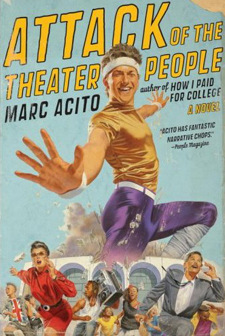 It's a book review, silly. Attack of the Theater People is the sequel to How I Paid For College: A Novel of Sex, Theft, Friendship & Musical Theater. It was slightly less madcap, and delved into the very serious issue of coming out as a gay man in the early days of AIDS awareness. Otherwise it was a delightful romp from Hell's Kitchen to Upper Manhattan. If you're looking for something to read that is both fun and intelligent, look no further. Recommended.
Friday, July 17, 2009
The Incomparable, Irreplaceable Warren Zevon
I'm so sick of the coverage Michael Jackson is getting! King of Pop? Warren Zevon was the uncrowned King of Cool. He had incredible talent and wit ... and yeah, he screwed up his life too. But he did it all by himself ... he didn't need a weird entourage that included chimpanzees, somebody else's children, and charlatan medical personnel ... and he straightened himself out at the end.
Here is Mohammed's Radio -- a timeless classic that proves the old saying: the more things change the more they stay the same. Or maybe that we never stopped mucking about in the Middle East.
Here is Mohammed's Radio -- a timeless classic that proves the old saying: the more things change the more they stay the same. Or maybe that we never stopped mucking about in the Middle East.
More Summer Reading
 I went back to bed this morning so I could finish this book, How I Paid for College: A Novel of Sex, Theft, Friendship & Musical Theater by Marc Acito. Some of you dear readers may be familiar with Marc Acito. Apparently he has a syndicated newspaper column and is a frequent common 'tater on NPR, known in some circles as the "gay Dave Barry". I have never read or heard any of his work before. A friend (as in the Facebook variety) set me up on a blind date with this book.
What can I say? Read. It. I don't want to say too much about it, but it was, in a word, delicious. With echoes of Red Sky At Morning (the Richard Bradford novel) and and A Prayer For Owen Meany -- two of my favorite coming-of-age novels, I enjoyed every minute of reading this book. It almost made me want to go back and repeat my senior year of high school. (Oh, wait. I didn't have a senior year of high school. I graduated after my junior year with about a million credits in folk dancing augmented by juggling. Life at an alternative high school in the seventies ...)
This kind of book is what summer reading is all about. Ahhhhh. Highly recommended.
Monday, July 13, 2009
Hostile Takeovers of the Corporate Kind, a book review
I have been a fan of the more recent writing of Jon Katz, and I was curious to read some of his earlier writing. Sign Off: A Novel of Men and Work was published in 1991. It chronicles the hostile takeover of United States Broadcasting (USB), a fictitious television network, as seen through the eyes of Peter Herbert, the executive producer of a nationally syndicated morning news program. UBS is taken over by David Nab, a self proclaimed "condo king" who has made a fortune in real estate and wishes to have the prestige that goes with owning a television network. Herbert watches in horror as, in a few short months, Nab lays waste to the network news, as well as the careers, and indeed the lives of his longtime associates, always wondering when the ax will fall on him.
This was a really compelling read. As a lowly Midwestern schoolteacher who has never aspired to the kind of lifestyle that Katz describes, I experienced a kind of guilty pleasure in reading about these people. It was a little like reading a Kitty Kelly tell-all.
Beyond the story however, I think that Sign Off made some important points. If the slash-and -burn mentality that Katz describes is accurate -- and I have no reason to believe otherwise; he did a stint as executive producer of the CBS Morning News -- it speaks volumes to the miserable failure of the mainstream media to take on the corporate culture of American politics, which we saw flourish under the Bush Administration, and sadly continues under Obama.
The novel also underscores something that I have thought about a lot in the last couple of years, watching people I love -- mostly middle-aged men -- struggle with unemployment. I believe from the bottom of my heart that a covenant was broken with American workers, people who spent the better part of their adult lives working hard and paying into "the system" only to be discarded as if they were yesterday's garbage. If you haven't been there, let me tell you -- it shatters a person's sense of self like nothing else can and has enormous impact on family relationships as well.
Furthermore, I question whether when businesses say that they are "losing money" is it really a matter of having a smaller profit margin? I think, in many cases, yes, absolutely. When corporations "downsize" or "cut the fat" it is all about increasing the profits for the stockholders. Tell me, where in the Constitution does it say that stockholders have a right to make huge profits?
Reading Sign Off, I would almost say that Katz was prescient. What happened to television news has also happened in print media, and in fact has reached into almost every corner of our society. I suspect though, that he was just observing the beginning of the corporatization of the U.S. (and the world.) Michael Moore was certainly talking about it and Ralph Nader, of course.
It was also utterly fascinating to see the anatomy of a hostile takeover. It is a term I have heard plenty of times, but really only had the most superficial understanding of what it meant. It strikes me that, among the provisions of that most horrible No Child Left Behind legislation are the sanctions for "failing schools" that include "reconstituting" a school's staff. That's nothing more than a hostile takeover -- welcome to corporatized America. (Don't get me started on Obama and education. I can hardly write about it, I am so furious.)
Sign Off is a very well-written, illuminating, and entertaining book. After many years of writing memoir, Katz is once again returning to fiction. I am looking forward to it.
Recommended, but it might take some digging to find it. It's worth the search.
Book Review: Ladies' Coupe by Anita Nair
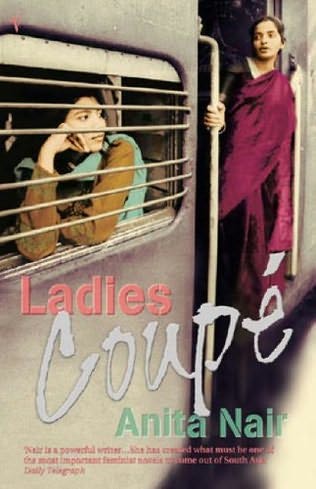 I picked up Ladie's Coupe for 80¢ in the St. Vinnie's book room, because I liked the cover. I liked the cover, OK? I defied years of people intoning, "Don't judge a book by its cover ..." and you know what? The Library Goddess did not smite me with her bun and spectacles. That's a good thing.
Reading Ladies' Coupe was a good thing too. This is a novel about Akhila, 45-years old and never married. Her father died when she was in her late teens; as an acknowledgment of his years spent working in an income tax office, Akhila is given a position as an income tax clerk so that she can support her mother, sister and two brothers. And so the years slip by, until one day Akhila realizes that she has done nothing for herself. She decides to take a short vacation to a seaside resort -- alone, much to her family's consternation.
Up until quite recently female travelers on India's railways had the option of riding in the "ladies' coupe" -- a compartment set aside strictly for women. Akhila reserves a seat in a ladies' coupe, and traveling among women whom she knows she will never see again, she feels free to ask them, does she really need a marriage to be fulfilled? During the course of the journey, each of the other 5 women in the coupe has a chance to tell her life story.
For some reason I have a special interest in India. I've loved the films of Mira Nair (no relation to the author of this book that I know of) and have read quite a few novels as well. This really was a marvelous addition to the canon. I recommend it.
Wednesday, July 08, 2009
Paul and his girlfriend Des

 Apparently this eagle, Des, was notoriously cranky with 'most everybody else at the nature center, but took a liking to my brother. He always has been a bit of a ladies' man ...
Tuesday, July 07, 2009
Bursting With Pride!
How cool is this? Pretty darned cool! Check out the by-line on that article ... THAT'S MY BIG BROTHER!! I am very proud of him, and I forgive him for all the times he teased me and made me cry, even giving me the nickname Sig (Suzy + pig) and shining a light on me and chanting, "Spotlight on stinkbomb Suzy." And you know what? He is a really good writer! Go, Paul!

 You have to embiggen this one and tilt your head to read the by-line.

 You have to embiggen this one and tilt your head to read the by-line.
Book Review: Monstrous Regiment by Terry Pratchett
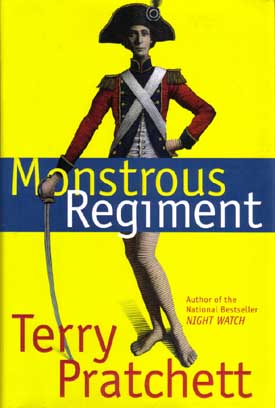 It is difficult to say much about Monstrous Regiment without giving too much away and spoiling it for you, so I'll keep my review brief. In Monstrous Regiment Pratchett skewers the military industrial complex, the war on Iraq, religious fundamentalists, and traditional English folk songs. This is among my favorite books by Terry Pratchett. It's a hoot.
Saturday, July 04, 2009
Believe it or not, I've wondered about this ...
Crooks and Liars has an interesting piece today, tracing California's current fiscal woes back to 1978's passage of Proposition 13.
Here in Wisconsin we have our own version, although ours is not part of the state constitution ... yet. The other thing unique about our revenue caps that supposedly give tax relief to property owners, is that they specifically target K-12 public school districts. Our then-Governor Tommy Thompson (remember Tommy? He ran for the Republican nomination in the last presidential election) had a personal vendetta against teachers. He gave us the revenue caps and took away our right to bargain fair contracts, two gifts that have kept on giving for the last 16 years.
Here in Wisconsin we have our own version, although ours is not part of the state constitution ... yet. The other thing unique about our revenue caps that supposedly give tax relief to property owners, is that they specifically target K-12 public school districts. Our then-Governor Tommy Thompson (remember Tommy? He ran for the Republican nomination in the last presidential election) had a personal vendetta against teachers. He gave us the revenue caps and took away our right to bargain fair contracts, two gifts that have kept on giving for the last 16 years.
Friday, July 03, 2009
Support Your Local Food Pantries!
Summer is typically a time when food pantries are hurting. Kids who normally get breakfast and lunch at school are home. There is a strain on the resources of food pantries.

Behold, the Million Can March. An alternative to the ridiculous "tea parties" being held around the country this weekend. Something that will make a real difference in the lives of members of our communities.

From Les Enrages.org (the brilliant masterminds behind this movement)
• If in doubt, call the agency you plan to donate to and ask them what they need.
Here's a basic list:
• cereal, instant oatmeal
• Canned meats & fish (tuna, salmon, deviled ham, canned chicken, etc)
• Peanut butter, jelly, crackers
• fruits and vegetables
• Soups, stews, canned pasta dishes like beefaroni, lasagna, ravioli
• Boxed potatoes and rice and pasta mixes in a box or pouch
• "Just add water" cake, pancake, muffin mixes, etc.
• Canned and powdered milk
• Infant formula and baby foods
You can also think in terms of a meal:
• Spaghetti sauce and pasta
• Tuna and macaroni and cheese
• Beans & Rice
You get the idea, and then add a vegetable, a fruit, and a sweet treat.
Really, this isn't rocket science. Give what you like to eat!
Here is a link to food pantry and meal sites in the Madison (Wisconsin) area.
Thursday, July 02, 2009
A Fruity Book Review
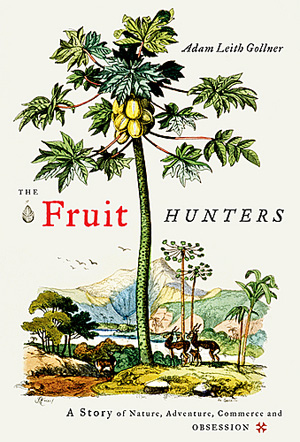 I am a fan of those monomaniacal nonfiction books, the ones that go into great depth on one subject. In this case the subject is fruit and the book is Adam Leith Gollner's The Fruit Hunters: A Story of Nature, Adventure, Commerce and Obsession. Why fruit? It hasn't really ever before been an obsession of mine. I try to eat my 5 servings a day with varying degrees of success. However, as I read the book, I became aware that I may be a little more fruit-obsessed than I thought. I like growing fruit in my yard: I've been quite successful with currants and raspberries, less so with cherries, choke cherries, and service berries. Those are fruits of the north. Gollner's book is filled with tropical fruits, more fruits than you can imagine.
"The diversity is dizzying: most of us have never heard of the araça, but Amazonian fruit authorities say there are almost as many types of araças as there are beaches in Brazil. Within the tens of thousands of edible plant species, there are hundreds of thousands of varieties – and new ones are continually evolving. Magic beans, sundrops, cannonballs, delicious monsters, zombi apples, gingerbread plums, swan egg pears, Oaxacan trees of little skulls, Congo goobers, slow-match fruits, candle fruits, bastard cherries, bignays, belimbings, bilimbis and biribas. As Hamlet might’ve said: 'There are more fruits in heaven and earth, Horatio, than are dreamt of in your philosophy.' ”Suddenly I feel fruit-deprived; of the small percentage of the world's fruits that are grown or allowed into the U.S., by the time they get to my landlocked city, they will have been on the road for days, sometimes weeks, and the flavor a mere shadow of what it should be. There are the hundreds of varieties of more familiar fruits that have been neglected in our commercial fruit monoculture, so we only ever get to eat one or two varieties of pears, strawberries, bananas, figs, avocadoes, pomegranates, etc. etc. etc. And then there are the fruits that will never make it here: the chupa chupas, bignays, sapotes, gourkas ... Sigh.
(I can't say I'm sad about the durian though. I once had the bad fortune to eat a durian-filled cookie from the Asian grocery store. I absolutely could not choke it down, ended up gagging into the garbage can, and even so, I burped up durian taste all day long. Then again, some people say they have the same reaction to cheese.)
If you ever thought that fruit was just a side dish, an afterthought, guess again. Gollner shows, in no uncertain terms, how fruit has shaped and defined life on earth in general, and human life in particular. He takes the reader to the very extreme edges of his subject: the fanatics who stop at nothing to get their hands on a fruit and the fruitarians -- people who eat nothing but fruit (and their subsets such as the "rockguacamolians" who only eat avocadoes sprinkled with asteroid dust,) and shows us the underbelly of the fruit world as well. The way that the fruit trade is linked to organized crime, for example. The creepy, underhanded treatment and marketing of "wholesome" fruit. The geopolitics of fruit. Or the fact that the idling semi-trucks that serve the huge Hunts Point Fruit Market in the Bronx are responsible for way elevated, life-shortening asthma rates (which I've read about in Jonathan Kozol's books about the work he does with schoolchildren in the South Bronx.)
Reading The Fruit Hunters has made it difficult for me to think about fruit in the same way that I did before. Shopping at my local food co-op this week, I was sorely disappointed to see that, with the exception of one small bin of local apples, virtually all the other fruit was imported from California or Mexico, including the strawberries, raspberries, and blueberries. I had a hard time buying anything!
I have been, however, deeply appreciative of every red raspberry that I have plucked off the bushes in my backyard. I'm thinking of planting a paw paw tree. I am also heading back to a serviceberry tree that I found growing on a city street a few blocks from here, dropping its sweet, delicious berries onto the sidewalk. There are a lot of fruits to forage, right here.
Oh! Am I reviewing a book? Sorry, I forgot. The Fruit Hunters: dripping with sex (yes, really!) An entertaining and enlightening read. Recommended.
Wednesday, July 01, 2009
Delicious Synchronicity
 I am rereading my favorite book by Terry Pratchett, Monstrous Regiment, and was moved to copy down the following quote:
"The presence of those seeking the truth is infinitely to be preferred to the presence of those who think they've found it."Then, as I perused my favorite news sites this morning I found this pearl from "Joe" the "Plumber":
Asked if he has plans to run for public office, he replied, “I hope not. You know, I talked to God about that and he was like, ‘No.’”Weird, huh?
Sunday, June 28, 2009
The Truth Revealed
Alright, alright ... Madison doesn't really have parking spaces reserved for octopi. It's the name of a business, silly. Octopus Carwash. Apparently it is a franchise, and I believe it's been in Madison at least as long as I have (46 years.) When our eldest daughter was a toddler, our route home from her day care took us past a number of landmarks: the giant octopus, the big black clock, the big green fish, the other giant octopus, the horses ... It was a highlight of her young life when her aunt actually took her to the car wash once. (No one has ever been able to accuse me of going to a car wash! And it shows ...) The big green fish is gone (along with the neon cockroach and dead rat sign -- landmarks from my childhood, so sad) but I am so glad that we still have the giant octopi and that we provide parking for them.

Saturday, June 27, 2009
Signs #1
 The residents of Madison, Wisconsin are frequently accused in public forums of being "politically correct." Is that a valid criticism? Well, here we are, a thousand miles from the nearest saltwater and we reserve parking for OCTOPI? PETA would be so proud!
Wednesday, June 24, 2009
Tuesday, June 23, 2009
You know, you can read a lot more books when you stay in the kids' section!

Yes, this is another book review. Already. When I Was a Boy Neruda Called Me Policarpo is a memoir by the Chiléan author Poli Délano, of a childhood frequently spent in the company of the great poet Pablo Neruda. This is a simple, yet moving little book with charming illustrations. It takes place during turbulent, even dangerous times when Neruda was in exile from Chilé, but the child Poli remembers the small moments: the crazy badger that Neruda kept as a pet, Sunday outings, going to the market to search for the weird old junk that Neruda collected, a trip to Acalpulco … He also recalls the life-lessons Neruda taught him, about social justice and standing up for one's beliefs. Each chapter is separated from the next by Neruda's poetry; the poems give Poli's memories a context.
At the end of the book there is a short biography of Pablo Neruda. I love that Délano does not minimize Neruda's political beliefs. Not only can this book serve as an introduction to Neruda for young adult readers, but I would hope that it could also be used to explore some of the history of the last century: the rise of European fascism and the relationship that the U.S. has had with Central and South America.
This is a beautiful book, and certainly one that I will be recommending to my daughter's middle school teachers and librarian. (I suspect it will not be available in the Scholastic book order!)
One more, semi-related thing: If you have not seen the film Il Postino, you would not go amiss in looking it up and watching it. It tells the story of a simple rural postman who is befriended by Neruda, and has his life irrevocably changed. It is a beautiful film.
Monday, June 22, 2009
Summer Reading -- The Yggyssey by Daniel Pinkwater
 You know, I had never thought about the The Wizard of Oz being based on Homer's Odysseus. However, Daniel Pinkwater clearly had, when he wrote this book. The Iggyssey: How Iggy Wondered What Happened to All the Ghosts, Found Out Where They Went, and Went There is a sequel to The Neddiad. Yggdrasil Birnbaum is familiar with the ghosts of Los Angeles (of whom there are many) and she becomes concerned when they begin to disappear. Determined to solve the mystery, Iggy and her friends Neddie Wentworthstein and Seamus Finn follow a ghostly bunny through a portal that leads ... somewhere.
The Yggyssey pays homage to some great moments in children's literature. It is also filled with Pinkwater's signature humor -- intelligent, self-deprecating, puckish at times. The Neddiad and The Yggyssey are both quick reads, very entertaining, highly recommended.
Sunday, June 21, 2009

Saturday, June 20, 2009
Lounging Around --A Theatah Review
 Last night was opening night for Broom Street Theater's new production, Lounging Around, an original play by Siobhan Edge. For you readers in foreign parts (i.e. not from Madison,) for the past 40+ years, BST has been delighting, shocking, offending, and entertaining theater-goers with original works. Lounging Around is a comedy woven around the conversations of a diverse group of travelers stuck in an airport lounge when their flight is delayed due to heavy fog.
My younger daughter -- the daughter formerly known as "Sparkly Seacow" -- made her Broom Street debut, with 3 roles in this play: an elderly woman (82 years old, Dearie!), a Valley Girl with a cell phone, and a bratty little girl. Thumbs up for all of them! I may be a little biased, but I think she did a fantastic job and I'm very proud of her.

 Photos by N-dig0 (tb3), used with permission
Thumbs up for the entire production! The dialogue was witty, the action was fast-paced, and the acting was good.
If you live in the Madison area, make this stage mama happy and go see Lounging Around!
Friday, June 19, 2009
Another Day, Another 2 Book Reviews
"And it was summer, warm, beautiful summer ..."
For me that means reading. Lots of reading. I have read 2 books so far, as different from each other as night and day, as the saying goes.
 First is Ben Logan's memoir of growing up on a Wisconsin farm, The Land Remembers. You don't have to be from Wisconsin to enjoy this book. (And by the way, real Wisconsinites do not refer to themselves as "Sconnies.") Ben Logan was born in 1920 at his family's "Seldom Seen Farm" in the hill country between Gays Mills and Mount Sterling, Wisconsin. Reading it, I was struck by two things:
1) Everything Logan writes about happened just one generation ago, my parents' generation. His father farmed with horses, they had no indoor plumbing or electricity, and his family was entirely self-sufficient. I remember visiting relatives on a farm like this in northern Wisconsin, 40 years ago. The changes that have been wrought in a single generation are almost beyond belief, and not all bad of course, but something was surely lost in the headlong rush forward in the name of "progress".
2) The land ethic that Logan learned from his parents seems way ahead of its time. He was taught to be a steward of the land. His father did not jump on every (or even most) agricultural bandwagons, because he was cautious of the long-term effects. Farmers were peddled a lot of snake oil in those days, much of which has led to the environmental crises we are facing today.
The Land Remembers is a beautifully -- even poetically -- written book. Ben Logan left Wisconsin as a young man and had a successful career as a writer and radio broadcaster on the east coast. He returned to Wisconsin in the eighties and bought back Seldom Seen Farm (it had been sold at some point) and lived there until a few years ago. When he moved off the farm, he donated it to the Mississippi Valley Conservancy, with the agreement that they would keep it in use as a sustainably-managed farm.
Highly recommended, especially for people with an interest in sustainability or lovers of memoir.
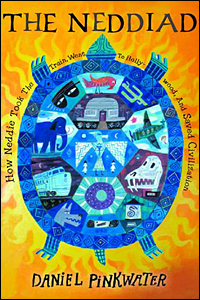
The second book of the summer is Daniel Pinkwater's The Neddiad: How Neddie Took The Train, Went To Hollywood, And Saved Civilization. In this book, Pinkwater takes the epic quest/hero's journey fantasy and turns it on its ear. It is the early fifties and Neddie Wentworthstein is moving with his family to Los Angeles. On the way he meets a shaman named Melvin, who gives him a small stone turtle, telling him not to lose it. Neddie, of course, has many adventures and encounters both friends and foes, before he is able to complete his quest.
 If you are not familiar with the writing of Daniel Pinkwater, you don't know what you're missing. His sly sense of humor isn't necessarily of the laugh-out-loud-'til-your-stomach-hurts variety, but he had me chuckling throughout the entire book. He pokes fun at Jews, Republicans, military establishments, Madison Avenue, Hollywood, and anything else you can think of. A couple of high points, but I don't want to spoil all of the jokes for you:
For me that means reading. Lots of reading. I have read 2 books so far, as different from each other as night and day, as the saying goes.
First is Ben Logan's memoir of growing up on a Wisconsin farm, The Land Remembers. You don't have to be from Wisconsin to enjoy this book. (And by the way, real Wisconsinites do not refer to themselves as "Sconnies.") Ben Logan was born in 1920 at his family's "Seldom Seen Farm" in the hill country between Gays Mills and Mount Sterling, Wisconsin. Reading it, I was struck by two things:1) Everything Logan writes about happened just one generation ago, my parents' generation. His father farmed with horses, they had no indoor plumbing or electricity, and his family was entirely self-sufficient. I remember visiting relatives on a farm like this in northern Wisconsin, 40 years ago. The changes that have been wrought in a single generation are almost beyond belief, and not all bad of course, but something was surely lost in the headlong rush forward in the name of "progress".
2) The land ethic that Logan learned from his parents seems way ahead of its time. He was taught to be a steward of the land. His father did not jump on every (or even most) agricultural bandwagons, because he was cautious of the long-term effects. Farmers were peddled a lot of snake oil in those days, much of which has led to the environmental crises we are facing today.
The Land Remembers is a beautifully -- even poetically -- written book. Ben Logan left Wisconsin as a young man and had a successful career as a writer and radio broadcaster on the east coast. He returned to Wisconsin in the eighties and bought back Seldom Seen Farm (it had been sold at some point) and lived there until a few years ago. When he moved off the farm, he donated it to the Mississippi Valley Conservancy, with the agreement that they would keep it in use as a sustainably-managed farm.
Highly recommended, especially for people with an interest in sustainability or lovers of memoir.
The second book of the summer is Daniel Pinkwater's The Neddiad: How Neddie Took The Train, Went To Hollywood, And Saved Civilization. In this book, Pinkwater takes the epic quest/hero's journey fantasy and turns it on its ear. It is the early fifties and Neddie Wentworthstein is moving with his family to Los Angeles. On the way he meets a shaman named Melvin, who gives him a small stone turtle, telling him not to lose it. Neddie, of course, has many adventures and encounters both friends and foes, before he is able to complete his quest.
If you are not familiar with the writing of Daniel Pinkwater, you don't know what you're missing. His sly sense of humor isn't necessarily of the laugh-out-loud-'til-your-stomach-hurts variety, but he had me chuckling throughout the entire book. He pokes fun at Jews, Republicans, military establishments, Madison Avenue, Hollywood, and anything else you can think of. A couple of high points, but I don't want to spoil all of the jokes for you:We only stopped for gas, plus once, when we were across the state line in San Bernardino, California, at McDonald's fifteen-cent hamburger stand, where you Buy 'Em by the Bag. "This is a good idea," Seamus Finn said. "They should open more of these."I can hardly wait to read the companion book, The Yggyssey, next up. These books would make an excellent gift for any 11-13 year olds you know, especially if they're getting a little overdosed on the kid wizard from Britain.and"There's only so far we can go with this sort of thing," Aaron Finn whispered. "I think it may be against the law to torture people, even if you're a movie star and a Republican."
Sunday, June 14, 2009
In A Dark Wood Wandering: A Novel of the Middle Ages
 This is a book I picked up on a whim, used in a library resale shop. According to the blurb on the cover, it has been in print continuously since 1949. I figured that may indicate a good book.
The introduction tells how the book came to be translated into English, a fascinating story unto itself. Published in 1949 in Holland, it was a bestseller throughout continental Europe, but virtually unknown in the U.S. In the early fifties a postal clerk/writer in Chicago named Lewis C. Kaplan, whose avocation was translating obscure pieces of literature into English, happened to see a reference to the book in a literary magazine and decided that he wanted to translate it. He wrote to the Dutch publisher and the author, received permission, and began. Mr. Kaplan did not speak Dutch, so the translation was an arduous process. He finished a first draft and was beginning to work on a revision when he died in 1958.
His distraught widow disposed of all his effects, but held on to the last manuscript he was working on, putting it into a briefcase in a closet in her apartment. Twenty years later when her apartment had a fire, Kaplan's son came to help his mother clean up the mess and discovered the briefcase with the sodden manuscript in it. He took it, dried it out and set about trying to discover what it was. (It had no identifying title or other information.) By chance, Kaplan's widow found a slip of paper with the author's name on it, and the son tracked her down through the Library of Congress.
Here's the part I like: Of the 20 years that the manuscript sat in the back of a closet the introduction says, "During that time Hella Haasse [the author] thought occasionally of Mr. Kaplan and the English version of Het voud der verwachting; it seemed to her that he was taking considerable time to complete his work, but she knew that he had tackled a formidable task and, with commendable sensitivity, she hesitated to give him the impression that he was being rushed."
There were more chance events that led eventually to the U.S. publication of In A Dark Wood Wandering in 1989, 40 years after it was first published!
The novel itself takes place in the late fourteenth and early to mid-fifteenth centuries during the Hundred Years War between England and France. The main protagonist is Charles d' Orléans, nephew to King Charles VI. The novel traces his long and eventful life as it was interwoven with the politics of the day. At the age of 20 Charles d'Orléans was taken hostage by the English after the infamous battle of Agincourt, and imprisoned in England for the next 20 years. During his exile, Charles wrote poetry for his beloved wife left behind in France and his even more beloved homeland which he recognized was being torn apart by the political skirmishes of the French nobility. He returned to France determined to live out his remaining years quietly, but couldn't avoid being sucked back into the political current from time to time. He lived to be quite old and fathered 3 children, one of whom ultimately became King Louis XII of France.
I enjoyed this book immensely. I like historical fiction in general, and this had the added bonus of being something completely new. I knew very little about the Middle Ages, and found it quite compelling. The writing was fresh and modern. I was struck by the realization that, time may pass, but politics are always the same, driven by the thirst of the gentry for power and money. (That's rather depressing, isn't it?)
In A Dark Wood Wandering is well worth reading.
Saturday, June 13, 2009
22 Years
 In what is possibly a first, Mr. Ether (a.k.a. Enriched Geranium) beat me to a blog post about our wedding anniversary. Over the years -- and particularly in the struggle for marriage equality for all people -- I've thought deep philosophical thoughts about the meaning of having the State sanction one's relationship with another person. Having it all to do over again, perhaps we would have chosen otherwise, BUT (and you know there's always a big but) even had we not gone through all of the legal mumbo-jumbo and the ceremony and the celebration (which I am sure is the only wedding in history to include a Gumby pinata and a seeing eye dog,) it would not have changed the wanting to spend my life with Ed.
 To get to the point, I married my best friend and it was the best thing I ever did. Happy anniversary, Ed. I love you.
Tuesday, June 09, 2009
In Memorium: Linda Farley
By John Nichols, writing in Madison's Capital Times:
Dr. Linda Farley did not live to see her dream -- the establishment of a universal health care plan that would provide quality care to all Americans -- come to fruition.
But the Verona physician who sought to heal a broken health care system survived long enough to see the first outlines of what she hoped would be a fundamental reform take shape.
Farley died Tuesday morning, on the very day that press reports indicated President Barack Obama would demand that Congress enact sweeping changes in the health care system before the end of the year, changes that reportedly will include a public option that reformers hope will lead to the establishment of a national health care plan like those now operating in most developed nations.
Farley, an ardent champion of a single-payer health care system run by the government as a public good rather than by for-profit insurers, would have loved to have been a part of the coming debate.
And she would have joined it as she did all others -- for peace, for economic and social justice, for civil liberties, for the environment -- with a rare and remarkable combination of urgency, warmth and good humor.
"I know we have a lot of work to do, so many barriers, so many challenges, so many powerful foes," she told me a few weeks ago, at another rally on another night when a woman of 80 who was battling cancer might have been excused for staying home. "But we've got to do it, so what's the point of getting frustrated. After all, we're right."
Farley, almost always in tandem with her husband and fellow physician, Dr. Eugene Farley, redefined health care activism in Madison and Wisconsin over the past several decades. Bringing lifetimes of medical experience and the calm, cheerful demeanors of the family physicians of another era -- when doctors had the time and the wherewithal to get to know, and love, their patients -- the Farleys made the case for fundamental reform in human terms.
At community forums, in church basements and union halls, on the stage before thousands at BobFest, the Farleys created a constituency for single-payer health care, and they changed the politics of the region. After Gene Farley toyed with a congressional run in 1996 on a health-care reform platform, a young state representative named Tammy Baldwin took up the mantle in 1998 and got elected in large part because she championed single-payer.
Baldwin adored the Farleys, and they her. A few years ago, the congresswoman nominated Linda Farley to be honored as part of the National Library of Medicine's "Local Legends" program. Baldwin, who is no slouch in this department, hailed her nominee as Wisconsin's "passionate crusader for health care reform."
But that didn't stop the intrepid Farley from lobbying the congresswoman, as she did every other official. And when the politicians fell a little short, she kindly -- but firmly -- prodded them. And they listened.
They listened because Farley knew of what she spoke.
Inspired as a teenager growing up in a blue-collar neighborhood in Rochester, N.Y., by novels about doctors who cared for the rural poor in Appalachia, she decided to become a physician.
Farley put herself through college and medical school working as a nurse's aide.
It was tough, but she was smart and determined. And she was cheered on by a fellow student, a young fellow named Gene Farley, who eventually convinced her that he shared her dedication to serving those who most needed, but could least afford, care.
Together, they worked at great teaching hospitals and inner-city clinics, on their own rural practice and in neighborhood health centers in big cities. They trained nurses in Jamaica and doctors in Madison. And when she retired, Linda Farley kept on caring for folks for free, making the rounds of local clinics and donating her services.
Farley "credited her two years in the mid-1950s on the northeastern Arizona Navajo Reservation as transforming her attitude and approach to medicine," recalls her biography at the National Library of Medicine. "Fifty miles from the nearest paved road, she and Gene lived in a small trailer and ran an outpatient clinic, providing medical care to the surrounding Navajo community, and also evaluating ambulatory treatment of tuberculosis using a then-new drug."The experience on the reservation was a powerful one for the Farleys. In fact, several weeks ago, to celebrate her 80th birthday, Farley returned with Gene and her children and grandchildren to Many Farms, Ariz., which is on the reservation. Gene said Linda delighted spending time with patients she had cared for more than 50 years ago.
Another major influence for the couple was their work at Meharry Medical School in Nashville, Tenn., -- the country's largest private, comprehensive historically black institution for educating health professionals and scientists -- where they established a faculty development program.
At the University of Wisconsin Medical School, Linda Farley served as an assistant professor of Family Medicine, and it was in this role that she received a great deal of regional and national recognition, earning the Society of Teachers of Family Medicine Task Force Appreciation Award in 1993, the Wisconsin State Medical Society Physician Citizen of the Year in 1995 and the American Academy of Family Physicians Presidents Award in 2001.
But the awards and honors were never more than cause for an awkward smile from an instinctively modest woman. Her many friends saw that smile once more this spring, when the Democratic Party of Wisconsin -- of which she was a loyal if frequently prodding member -- honored her and her dear friend, former state Rep. Midge Miller, for their decades of leadership and activism. Democratic Party of Wisconsin Chair Joe Wineke got it right Tuesday when he said that "Linda Farley was a beloved member of the Democratic Party who embodied our commitment to health care reform. Linda devoted her career in medicine and politics to helping the medically underserved and advocating for real health care reform."
While she accepted the honors -- especially if they helped advance the cause of health-care reform -- Farley got excited about caring for people, especially when she was volunteering at the South Madison Health & Family Center-Harambee and other free and low cost clinics.
She delighted in her children and grandchildren, and in her husband, Gene, who survives her. She enjoyed the Madison Quaker Meeting, and the hundreds of friendships and projects that came from it and her involvement with local peace and justice groups.
And Farley positively glowed when she was campaigning for single-payer health care, as a member of Physicians for a National Health Program, the activist group that she helped build into an organization with more than 16,000 physician members. "It's my passion," she would say.
Farley once said that "I'd like to be remembered as a good family doctor who really cared for people."
But she always added that "really caring" required doctors to do more than just give shots and write prescriptions. "We have to be active," she said. "We have to take our experience, our knowledge, and use it to shape a better health care system."
And so she did.
Gene and Linda are two of the loveliest people I have ever had the privilege of knowing. It seems to me that a fitting tribute to Linda would be to put single-payer health care at the forefront of the struggle for social justice, and make her dream a reality.
Monday, June 08, 2009
Why I Teach
I am coming to the end of my 23rd year as a public school teacher. 22 of those years have been in the same school district. I've had my highs and my lows during that time. I even considered resigning at one point about 10 years ago, because it felt like I had no reserves left. My well was dry.
Yesterday I had one of those experiences that teachers live for, the kind that you usually only get when you've been teaching for a while. I responded to a friend request on Facebook -- a high school teacher in my district. And in looking at her profile page I saw a comment from a former first grade student of mine whom I had lost track of over the years. I wrote a "Hello, do you remember me?" comment and received the sweetest message in return, telling me how influential I had been to her. In fact, she is just finishing up her first year as a 5th grade teacher!
I go along day in and day out, year in and year out. Some days I am joyful, other days I am grumpy. But I absolutely must never stop remembering that what I do -- sometimes the smallest, most commonplace, and seemingly insignificant thing I do -- can make a difference to a kid.
That is why I teach.
Friday, June 05, 2009
Fun With Highly Toxic Substances
I've written before about the website Boing Boing. I always find something there to delight and distract me from the woes of the world (or sometimes it helps me see something from an entirely new and different perspective.) Here is a link to a video about freezing mercury. Hmmm ... I'm looking for fun projects to occupy my kindergartners in the last week of school.
Seriously, I remember being in about 2nd grade when the scientist father of one of my classmates brought in mercury for us to play with. Yes, we handled it. It was cool how it broke up into many small blobs and then came together again into a big blob. Back in those days it was not known how toxic mercury was.
A few years ago when we were getting my parents' house ready to sell, I had the job of emptying the rusting metal shelf in the garage and disposing of the various tubes, cans, old mayonnaise jars, etc. of substances that my father had amassed over the years. (A physician by trade, he was a tinkerer by avocation, dabbling in chemistry, mechanics, physics, you name it.) So I loaded it all into the back of my station wagon and (a year or so later, after it sat piled in my driveway) hauled it over to the county "Clean Sweep" site for disposal. The woman working there was very efficient, sorting the stuff I could put out with the trash at home from the stuff they would dispose of. Then she picked up a little glass spice jar with a rubber stopper and said, "I wonder what this is? Oh! It's mercury!" I'm sure that was one she enjoyed telling at the dinner table that night!
Gosh, if I had only kept it, I could have made frozen mercury fish and turtles like in the video.
Monday, June 01, 2009
Robber Barons
I almost can't post this because I find it so discouraging. But it's so important, it should be seen. This is from the incomparable investigative journalist Greg Palast, about the forced bankruptcy of GM.
This story stinks to high heaven.
Screw the autoworkers.I had few illusions about Barack Obama as president. I knew he wasn't progressive and had some tense moments with friends when I wouldn't just jump on the bandwagon. I hoped he would give me a respite from worry and fear, and it didn't take long to see how illusory that was as well. Steve Earle was right when he said that whoever got elected, the real work would begin on January 20, 2009. I feel so worn down after 8 years of BushCo, yet there is indeed work to be done.
They may be crying about General Motors' bankruptcy today. But dumping 40,000 of the last 60,000 union jobs into a mass grave won't spoil Jamie Dimon's day.Dimon is the CEO of JP Morgan Chase bank. While GM workers are losing their retirement health benefits, their jobs, their life savings; while shareholders are getting zilch and many creditors getting hosed, a few privileged GM lenders – led by Morgan and Citibank – expect to get back 100% of their loans to GM, a stunning $6 billion.
The way these banks are getting their $6 billion bonanza is stone cold illegal.
I smell a rat. (Read the rest ...)
This story stinks to high heaven.
Saturday, May 30, 2009
Notta Book Review
Summer vacation is coming (June 12 -- YAY!!!!!!!!!!) and with it, lazy days of reading on the back porch punctuated by afternoon naps. In preparation I have put a number of books on hold at the library. Just to update my interested bookaphile readers (all 6 of you!) here is my current reading: I have taken a break from Queen Bees and Wannabes, Silk Road, and The Woman Behind the New Deal: The Life of Frances Perkins. They just weren't grabbing me, if you know what I mean.Now I am reading In A Dark Wood Wandering: A Novel of the Middle Ages, first published in Europe in 1949, and translated from the Dutch. I picked it up on a whim at the public library friends' shop It's a tome -- 574 pages of dense print -- but so far, so good. I'm finding it to be very engaging.
Next up: Daniel Pinkwater's The Neddiad: How Neddie Took the Train, Went To Hollywood, and Saved Civilization. Followed by The Iggyssey, also by Pinkwater. He is an author I frequently forget about, but I am always delighted by his writing. We used to torment our childless friends -- the ones who were scared of our children back when we were all younger and I hadn't yet become a hermit -- by forcing them to read Pinkwater's picture book The Wuggie Norple Story aloud. (Our youngest daughter, however, gave us our just desserts by insisting that we read it every night and change all of the characters' names to people she knew. Reading it became an ordeal of her barking out corrections at us: "NO, not Wuggie Norple. Petey!" Oh, how I miss those days now.)
Anyway, stay tuned for further book reviews.
Friday, May 29, 2009
I'd move to the Netherlands if it weren't so darned flat!
I read this wonderful bit of news on Boing Boing. Now, this is the kind of unemployment problem our country should have!
Wednesday, May 27, 2009
For your enjoyment ...
In 1969, a 14-year-old Beatle fanatic named Jerry Levitan snuck into John Lennon's hotel room in Toronto and convinced him to do an interview. 38 years later, Levitan, director Josh Raskin and illustrator James Braithwaite have collaborated to create an animated short film using the original interview recording as the soundtrack. A spellbinding vessel for Lennon's boundless wit and timeless message, I Met the Walrus was nominated for the 2008 Academy Award for Animated Short.
(Hat tip to TR for sending this my way. I love it!)
(Hat tip to TR for sending this my way. I love it!)
Tuesday, May 19, 2009
Violence Against Women
As I write this there is an ongoing manhunt in our city for a man who shot and killed his wife 2 days ago, the day their divorce became final. As it turns out, the suspect is "Fokky Weber" the very same bully who used to beat up my husband when they were kids. Mr. Ether says that one time he got sick of being hit over and over by said bully, and slugged him, making him cry. It didn't stop him though. Apparently he once mugged my brother-in-law, shaking him down for a nickel. Brian ran home and told his parents, who called the police. The police came and said, "He comes from a bad home, there's really nothing we can do." And the events of this week are the culmination of all those years of thuggery.
Where I'm going with all this is that the new issue of The Nation (which I read at the dentist's office) has an excellent column by Katha Pollitt, "Unnatural Born Killer":
Where I'm going with all this is that the new issue of The Nation (which I read at the dentist's office) has an excellent column by Katha Pollitt, "Unnatural Born Killer":
We are so used to violence against women we don't even notice how used to it we are. [my italics] When we're not persuading ourselves that women are just as violent toward men as vice versa if you forget about who ends up seriously injured or dead, or pointing out that most murders are of men by men, we persuade ourselves that violence against women just comes up out of nowhere. Murder is serious, especially if the victim is young, white, middle-class, pretty; harassment, abuse, domestic violence, even rape, not so much. After all, as I'm writing, I read that Houston, taking a leaf from Sarah Palin's Wasilla, is requiring rape victims to pay for the processing of their rape kits. Los Angeles has a backlog of 12,669 unprocessed rape kits, some so old the crimes have exceeded the statute of limitations. It's controversial to even use terms like "misogyny" and "male privilege" to explain the prevalence of these crimes and the shameful inadequacy of our social and legal response to them. And if you really want to be branded a square and a prude, try talking about the hatred and contempt for, and objectification of, women that permeates pop culture.We have an awfully long way to go as a culture. Food for thought.
Dental Work
I went to the dentist today ... first time in a long time. Even with insurance we have a pretty big outstanding debt from some crowns, and that puts a damper on things like preventive health care. I finally went however, and I need some work done -- no surprises there. But my dentist is cool*. For example, how many dentists' offices have The Nation as office reading material? How many dentists are former Union steamfitters? So I'll be going back in a few weeks to rack up some more debt. What the hell?
*Other cool facts about my dentist:
*Other cool facts about my dentist:
- He does free dental work for people who cannot afford it, such as homeless men.
- He junk-picks bicycles from off the curb and fixes them up.
- His office is decorated with his wife's artwork, not the usual dental office schlock.
- He plays good music.
Saturday, May 16, 2009
Woo Hoo!
A statewide smoking ban (in all workplaces including restaurants and bars, but not cigar bars, obviously) will be signed into law on Monday! Madison has had one for the last several years, and as the spouse of a working musician I can't tell you what a difference it has made. I am happy to see this go through.
Wednesday, May 13, 2009
The Merry Merry Month of May
Regretfully, I missed our local annual May Day celebration this year. It happens on May 1st at dawn. The Morris dancers, the Pagans, and other people who are in the know all converge at the end of Picnic Point to ... um, er ... erect a Maypole, dance, sing, leap over a bonfire and other fertility rites, and welcome summer. I love going to it, but it's so darned difficult to get up even earlier than usual, drive across town, then drive across town again to get to work by 7:30 a.m. (not to mention having to explain why I smell like a campfire!)
May is my favorite month, and May Day is one of my favorite holidays of the year. So I bring you The Watersons singing Hal-an-Tow:
And here is the genuine article, filmed in May 2008, in Helston, Cornwall. Someday I'm going to go there.
If British folk traditions are your cup of tea (ha ha, cultural reference intended) you should most definitely read the book In Search of Albion by Colin Irwin.
Sunday, May 10, 2009

Wednesday, May 06, 2009
Following My Muse
I just got home from my bi-weekly guitar lesson. More and more I am finding that I look forward to these lessons. What I mean by that is, that although I have been enjoying learning to play, I often feel a sense of shame around lessons: I haven't practiced enough, I'm going to make a fool of myself, and so on and so forth. However, my new teacher is so encouraging and the music that she is giving me to learn is exactly what I want to be learning. It is a very good fit.
As I was driving to my lesson today I was musing about me and the guitar, and I realized that when I'm playing -- when I get into what Mr. Ether calls "the zone" -- it really is playing in the truest childhood sense of the word. When I can let go of my inhibitions, and quit feeling like I'm channeling the Eugene Levy/Catherine O'Hara duo from A Mighty Wind, I feel so happy.
The late, great educator John Holt addressed that in a book he wrote about learning to play the cello as an older adult, Never Too Late. It's been a few years since I read it, but if I remember correctly, he wondered if we set up psychological barriers when we talk about "practicing" an instrument, and would it be different if it was just referred to as "playing." I haven't thought about that for a long time, but I suspect he was onto something.
That's it for now. I have to go and play my guitar.
Saturday, May 02, 2009
Book review: Monique and the Mango Rains by Kris Holloway
 Monique and the Mango Rains: Two Years with a Midwife in Mali chronicles Kris Holloway's two years as a Peace Corps volunteer in Mali, Africa and also tells the story of a remarkable young woman, Monique Dembele.
Kris Holloway was 21 years old and just out of college when she was assigned to the village of Nampossela, Mali. Her host in the village was 25-year old Monique Dembele, the midwife and general health care provider for the area. Monique had been born in the nearby city of Koutiala, and as is traditional, came to her husband's village to live after her marriage. Because she was fluent in French as well as the local language, she was selected by the village leaders to receive training as a health care worker. This work became Monique's passion.
One of the things that really struck me about Monique Dembele was that, although she had very little formal education and was relatively isolated from many of the ideas that women growing up in the Western world take for granted, she had an amazing feminist sensibility about her. To me it is the essence of feminism to be concerned about what's best for women and children. Monique knew from her health work that multiple successive pregnancies were often deadly for women, as was too-early weaning of babies, so she worked to make birth control pills available in her village.
Another example of this (and a very touching part of the book) was when Kris became aware of and was shocked by the Malian practice of female circumcision. Monique was equally shocked by the revelation that it was not universal practice, that women in the United States are not cut, and can actually enjoy sexual intercourse as much as men. This set Monique on the road of thinking about her younger, pre-pubescent sister, as well as her young daughter.
Over the two years that Kris lived in Nampossela and worked with Monique, the two women became fast friends, a friendship that endured after Kris returned to the United States. Monique visited the United States for a month in 1993. The two women corresponded, sharing their joys and sorrows. More than anything else, this book is a beautiful tribute to a friendship.
Holloway wrote the book after Monique's tragic death in childbirth with her fifth child. (This is not a spoiler. It is included in the book's introduction.) Kris returned to Mali in 1999 to try to understand her friend's death and to advocate for the education of Monique's three living children. The proceeds from Monique and the Mango Rains are directly benefiting her children, as well as helping to fund Clinique Monique outside of Nampossela, a medical clinic founded and run by Monique's cousin. Monique's younger sister Angelé followed in her sister's footsteps by becoming a midwife, and works at the clinic.
I highly recommend this book.
Friday, May 01, 2009
Definitely Beautiful
I posted a couple of things about work on Facebook, which elicited a chat with my friend Dave in Ottawa. (I have lots of friends named Dave, by the way.) He gave me some nice strokes -- just the sort of thing a teacher needs to hear on a Friday afternoon -- and sent me the link to this video of poet Taylor Mali. It made me cry.
Wednesday, April 29, 2009
Maybe You Can Help Me
I would like very much to acquire a copy of this book
 but I do not wish to spend upwards of $75.00 on it. If you should ever run across it at a thrift store or yard sale, would you be so kind as to purchase it for me? Or if you happen to have it sitting in your book case ... (hint, hint. I'm not naming names, but you know who you are. I'll give you a small amount of cash and a signed note that I will never again dis' J.K.Rowling in public. I promise!)
 but I do not wish to spend upwards of $75.00 on it. If you should ever run across it at a thrift store or yard sale, would you be so kind as to purchase it for me? Or if you happen to have it sitting in your book case ... (hint, hint. I'm not naming names, but you know who you are. I'll give you a small amount of cash and a signed note that I will never again dis' J.K.Rowling in public. I promise!)
Tuesday, April 28, 2009
Lunatic Fringe
 In a WaPo article today, headlined Gun Owners Attack Rush Limbaugh (no comment; I try to walk the path of nonviolence) I read that a number of national sport-hunting organizations are upset with that flaming liberal Mr. Limbaugh for doing public service announcements for the extreme fringe group The Humane Society of the United States, helping them "mainstream their image."
The Post reports:
Rush Limbaugh's new pet project -- fighting animal cruelty for the Humane Society of the United States -- is riling sportsmen from coast to coast, prompting fears that the talkster typically supportive of gun rights is aiding a group they say has a secret agenda to end all hunting in America.
Twenty-eight groups representing millions of hunters and sportsmen are demanding that the conservative radio commentator end his collaboration with the HSUS and stop "helping them to mainstream their image in the minds of reasonable people."
I have a few questions here. What the hell is a "talkster", as in "talkster backs animal group"? You mean he's not a mean-spirited, treacherous, oxycontin-using, bigoted, chicken hawk anymore? He's traded all that for the kinder, gentler handle of "talkster" -- one who likes fluffy kitties, no less? Why in the world would the HSUS want Rush to be a spokesperson? Does he even know that he is a spokesperson? The interview with Faux News' Greta Von-whatever her name is would suggest not.
This is just absurd! I didn't think I was going to get to use this tag again, but ... Jesus I'm sick of these people!
Saturday, April 25, 2009
Book Review: Men At Arms by Terry Pratchett
 My name is Suzy and, friends, I have an addiction to the writing of Terry Pratchett. It is not necessarily a harmful addiction by standard definitions. I still go to work, stay clean and sober, and feed my family. However, it does set the bar ridiculously high for literary quality. In short, because of Terry Pratchett I can no longer read just anything. His books are that good. In fact, there is a book -- currently out of print and stupidly expensive so I have not read it -- called Guilty of Literature. It's a collection of essays by other authors (A.S. Byatt, for one) about Pratchett's writing.
Men At Arms is the second book about the Watch, the police force of the ancient city of Ankh-Morpork. When the story opens, the Watch -- a typical old boys' club -- is struggling to integrate some new affirmative action recruits: a dwarf, a troll, and a w-. Captain Samuel Vimes, a 25-year Watch veteran, is retiring in 24 hours when he marries Lady Sybil Ramkin and becomes a part of Ankh-Morpork's society elite. Corporal Carrot ( a dwarf by adoption), Sergeant Fred Colon, and Corporal Nobby Nobbs round out the core group of Watchmen.
In the midst of this internal upheaval, a series of murders rocks the city of Ankh-Morpork. A murder in Ankh-Morpork is nothing unusual, but these murders appear to have been committed with a one-of-a-kind weapon invented by the genius Leonard of Quirm, and believed to have been destroyed by the Assassin's Guild: Ennog Eht. (Leonard of Quirm preferred to write in mirror writing.) Worse yet, Ankh-Morpork's patrician, Lord Vetinari -- a former assassin himself -- has ordered Vimes not to investigate.
Men At Arms is an excellent example of the brilliance of Pratchett's writing. He combines explicit and relevant social commentary with great stories, memorable characters, and exquisitely bad puns. Dear [blog] readers, there is a reason that Pratchett became Sir Terry Pratchett last year and is the second most popular fantasy writer in Britain. (OK, that one's easy: It's because J.K. Rowling had a lot of money backing her.) Maybe his writing isn't for everyone, but if you enjoy a good book -- I mean a really well-written book -- and you like to be made to think and laugh, then for Pete's sake, don't make me say it again: Read Terry Pratchett!!
The Watch series begins with the book Guards, Guards, then Men At Arms, Feet of Clay, Jingo, The Fifth Elephant, Nightwatch, and Thud!
Tuesday, April 21, 2009
Happy Birthday, Mr. Ether!
 Here's the cake I wish I could make for you. I love you! (Go wish him a happy birthday yourself, over at his blog, Enriched Geranium.)
Monday, April 20, 2009
Blogger Meet-Up
 Tweetey and her lovely daughters in Green Bay, Easter weekend. It's fun to put real faces with the words people write.
Wednesday, April 15, 2009
My Trusty Steed
I had an unsettling experience this morning. When I went to the garage to get my bike for the (ridiculously short) commute to work, I immediately knew that something was not right. We're pretty loosey-goosey about our garage, which mostly seems to be a haven for the neighbor's cat, squirrels, and once, a skunk ... but things didn't look right. My first thought was for Mr. Ether's bike, a nice vintage Trek and by far the most valuable. It was there, all the bikes were there, but his bike and mine were kind of tipped over. My bike had a big old grafitti sticker stuck to the seat that hadn't been there before, and when I went to ride it, the seat was tipped up at an awkward angle.
Furthermore, in a burst of common sense Mr. Ether had closed the garage door when we left on our little vacation last week, but when we returned he found the garage door open and Sparkly Seacow's bike in the driveway. He didn't make much of it, until my discovery today.
It looks as if someone came and took our bikes out for a spin and then returned them. How strange is that? I'm grateful that they were only borrowed, not stolen, but I still feel somewhat violated. I guess the lesson is to lock up our bikes, even in the garage, and keep the door closed.
Odd, very odd.
Monday, April 13, 2009
Book Review: The Wet Engine
 A few years ago my brother sent me this sweet little book, The Wet Engine: Exploring the Mad Wild Miracle of the Heart, by Brian Doyle. First, a few words about my brother Paul. He's an extremely funny and smart guy, wielding sarcasm and cynicism like a finely honed rapier. In our house there is an oft-repeated quote of his that has become something of a mantra for Sparkly Seacow: "Sarcasm in a child is an ugly thing", delivered dripping with sarcasm of course. Anyway, underneath Paul's oh so tough exterior is (and always has been) an incredible well of compassion for all sentient beings and for the natural environment. (However he doesn't suffer human fools gladly.) In short, he's a marshmallow.
Anyway, receiving this little gem of a book meant a great deal to me. Paul dropped everything and flew across the country to stay with me when our daughter Sophie died. He has been consistently attuned to my loss, and the gift of The Wet Engine was one more example of this.
Brian Doyle had twin sons. One was born healthy and whole, while the other one, Liam, had just three chambers in his heart and underwent two open heart surgeries as an infant to make his heart functional. This experience inspired Doyle to write an ode to this very essential organ, to all that it means to the human psyche, and to the doctors that saved his son and thousands of other children every year. Doyle's prose reads like poetry, by turns poignant, informative, and funny.
I've read it twice now. I will admit, it was a bittersweet read for me. Liam survived, in all likelihood will live into adulthood, and grow to be an old man. My daughter did not. But Doyle's purpose in this book isn't to celebrate a victory at the expense of all the other children who die of congenital heart defects. In fact, this book is so loving, sometimes I felt as if he was speaking directly to me and my bereavement. I often think that Sophie's death -- whatever situation led to her death -- resulted in new learning that saved the lives of many babies who came after her. Perhaps even Liam's life.
Doyle deftly interweaves his memoir with facts about the heart, some startling and some sobering. Here is a passage:
In America these days one woman dies every minute of every day from a failed heart. More women die of failed hearts than men. Failed hearts kill more women and men than the next seven causes of death combined. The highest rate of death by failed heart is in Utah. The lowest rate is in Mississippi. More than four hundred babies are born every day with flawed hearts. Eight of every thousand babies are born with flawed hearts. One percent of all babies born all over the world are born with flawed hearts. Twenty percent of all babies born with flawed hearts will die before their first birthday.The Wet Engine is a quick read, though you might want to savor it. It's a lovely book. Highly recommended.
(Just a personal note for anyone who knows my family -- or is my family -- and is reading this. The warm embrace of family and friends, the way that Sophie has been integrated into everyone's lives even though she is not physically present, fills me with love and awe. You are amazing.)
Tuesday, April 07, 2009
Go, Vermont!
(From Think Progress this morning)
Yesterday, Vermont Gov. Jim Douglas (R) vetoed a bill legalizing gay marriage that passed the state legislature last week. Now the legislature has voted to override Douglas’ veto: The Senate voted 23-5 in favor of the override, and the House voted 100-49. Vermont joins Massachusetts, Connecticut, and Iowa as the only states where gay marriage is legal, and Vermont is the first state to approve gay marriage through the legislature.
Sunday, April 05, 2009
Memorium
When I said "a world full of tragic news" I was thinking globally/nationally. I just found out that my former principal took his life yesterday. I am sick at heart. I worked with him for only one year but he restored my faith in teaching, in leadership, after a few years at the hands of an insane and vindictive principal. He resigned after just one year, saying that he couldn't be the kind of educator he wanted to be in the top-down, mandates-driven climate of our school district. I know that many people were angry at him for that. I was sad when he resigned, but I understood. When I talked to him privately later he told me he knew that I, more than anyone else, would get it.
I do not believe that there is ever a situation in which taking one's life is a solution. My heart goes out to him, for the pain he must have been in, as well as to his wife and children. Dan, I hope you have found peace.
I do not believe that there is ever a situation in which taking one's life is a solution. My heart goes out to him, for the pain he must have been in, as well as to his wife and children. Dan, I hope you have found peace.
"Personally, I'd pay good money to live somewhere called Treacle Mine Road."
Wow! In a world that's filled with some pretty tragic news this week, this is the best news I've read in a long time!
If you go down to Wincanton in Somerset today you can wander down Peace Pie Street and Treacle Mine Road, named after Sir Terry Pratchett's fantasy series Discworld.
Pratchett visited the town today to unveil the road names at a new housing estate, and was greeted by hundreds of fans – many dressed in costume.
Wincanton was twinned with the city of Ankh-Morpork from the novels in 2002, becoming the first UK town to link with a fictional place.
The builder of the Kingwell Rise development, George Wimpey, asked locals to vote for their favourite road name from a shortlist of 14 suggested by Pratchett.
Pratchett said: "I think it's a lovely idea, even though it makes my head spin to think of the books becoming a little closer to reality.
"And they are nice names, even though I say it myself.
"Personally, I'd pay good money to live somewhere called Treacle Mine Road."
So would I. 3 cheers for the citizens of Wincanton!
Saturday, April 04, 2009
Another Day, Another Book Review, Another Book By Jon Katz
 As you have probably surmised if you are one of the dozen or so people who humor me by reading my blog (even though my blog reading has dropped off considerably for the nonce -- I'm sorry ...) I'm on a bit of a Jon Katz jag right now. I've been a rather joyless reader this year. There has been very little that has inspired me. I've started a number of books, lost patience with them, and simply quit reading them. Others I've read all the way through, only to close them with a hmm. In short, it's been a dry season. Then I remembered how much I enjoyed Katz's first couple of books about his dogs, and decided to catch up with what he's doing now.
A Good Dog just about broke my heart -- perfect! I welcome a genuine good cry. Reading out of chronological order, I jumped to Izzy and Lenore: Two Dogs, an Unexpected Journey, and Me. Izzy is a purebred border collie, another rescue dog. Initially unwilling to go there again after his experiences with the rescued border collie Orson, Jon -- I've read so many of his books now, that I feel we can be on a first name basis -- Jon realizes that perhaps he has been given a second chance to get it right with Izzy, and decides to keep him. Lenore is a black lab puppy that Jon buys from a breeder.
One of the things I really love about these books is that, although they are funny, moving, and even sentimental, there is little that is syrupy, dewy-eyed, or manipulative about them. Jon simply loves his dogs (and a handful of other animals) and through them, as well as his writing and Bedlam Farm, he is trying to make sense of his life. So in a sense, he is just chronicling his muddling through, and as an experienced muddler myself, it resonates deeply.
The "unexpected journey" refers to Jon and Izzy's work as trained Hospice volunteers. The chapters where he describes Izzy's (and his own) interactions with dying people and their families are beautiful. It may also refer to Jon's struggle with a particularly deep depression that winter, about which he writes movingly and candidly.
I find these books to be very spiritual, and I was surprised and pleased to find out near the end of Izzy and Lenore that Jon is a Quaker. He doesn't claim to have any answers to anything really -- not dog training, not farming, not faith nor love -- and it is precisely that not knowing that makes me want to keep reading his work.
Did I say "keep reading"? Oh yeah, I am nearly finished reading Dog Days: Dispatches From Bedlam Farm, the book that actually precedes Izzy and Lenore. I understand there is a new book coming out this summer, one that spotlights Rose, his workhorse border collie. I'm looking forward to it.
Wednesday, April 01, 2009
National Poetry Month Begins ...
I do not consider myself a poet. I'm too self-conscious to write quite so intimately. However, our family enjoys making up classical haiku, mainly about our cats Feather and Daisy. Here are a few that were written on the whiteboard on our fridge for about 2 years. I'm not sure which family member wrote which poem. Mr. Ether will probably set me straight.
Daisy sits atop
the dirty kitchen linens.
Does she need a wash?
The mighty huntress
lies in wait for the ambush.
Brrt! Into the tub.
(This one commemorates Daisy's habit of hanging out in the bathroom at the top of the stairs and hopping into the tub with a kitty chirp when you come up the stairs. Weirdo.)
Stealthily she creeps
stalking the wild shoelaces.
Oopsies! Claws got stuck.
Sleek, silky, black fur.
Relentlessly she meows,
"Throw the damned pom-pom!"
The cat wants downstairs.
Loving the chase, the dog waits.
Ow! Bloody shoulders.
Subscribe to:
Posts (Atom)